Folklore
folklore
folk culture
Learn Folklore with free cards in 30 seconds.
10 minutes a day can add up to 3,000 words a year. Spaced flashcards bring each word back when it is time to remember it.
Folklore fits your vocabulary level. Check your level if you are not sure.

How many words can you learn in a year?
If you learn 8-10 new words a day and review them regularly with flashcards, you can cover about 3,000 words in a year.
ZapomniEnglish brings words back at the right time: difficult words appear more often, familiar words less often.
Not sure what pace to start with? Check your vocabulary level and we will suggest words for your level.
We count words you add to learning and review regularly. Active use grows gradually and depends on practice.
| Pace | Per day | Per year | Best for |
|---|---|---|---|
| Easy | 3 words | ≈ 1,100 words | starting without pressure |
| Balanced | 5 words | ≈ 1,800 words | steady growth |
| Recommended | 8 words | ≈ 2,900 words | around 3,000 words a year |
| Fast | 10 words | ≈ 3,650 words | visible vocabulary growth |
| Intensive | 15 words | ≈ 5,500 words | strong motivation |
Folklore with English translation
Folklore usage examples
Usage examples will appear here with translation and context.
Learn by topic
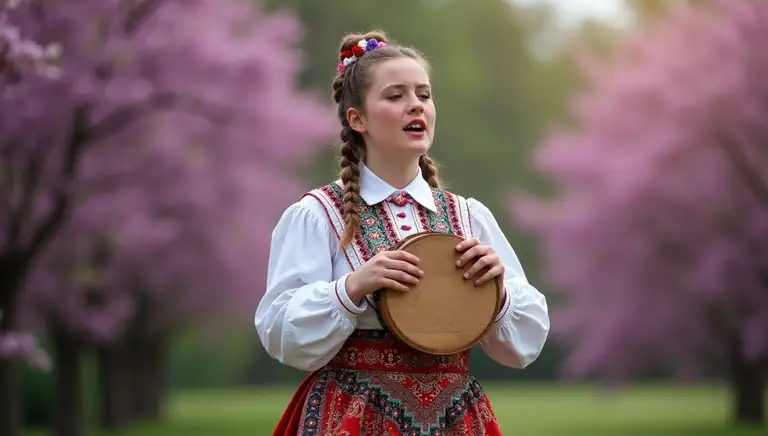
Folklore belongs to the topic "Culture and Traditions of Countries". Start with a short 7-word set so the word is easier to remember in context.
Folklore synonyms
What's the difference between Folklore / Brauchtum / Überlieferung / Volkskultur / volkstümliche Kultur / Bräuche
A scholarly discipline studying folk culture, customs, and traditions; it refers to the academic field rather than the traditions themselves.
Die Volkskunde beschäftigt sich mit Liedern, Bräuchen und Erzählungen aus dem Alltag früherer Generationen.
Фольклористика занимается песнями, обычаями и рассказами из повседневной жизни прежних поколений.
Customs and ritual traditions, especially stable ones passed down within a community from generation to generation.
Zum Brauchtum des Dorfes gehört ein jährlicher Umzug im Frühjahr.
К обычаям деревни относится ежегодное шествие весной.
The passing on of knowledge, stories, and traditions from one generation to the next; it emphasizes the act of transmission.
Diese Sage ist nur durch mündliche Überlieferung erhalten geblieben.
Эта легенда сохранилась только благодаря устной передаче.
The culture of a people in a broad sense: customs, festivals, music, clothing, and everyday life.
Die Volkskultur der Region zeigt sich in Musik, Tänzen und Festen.
Народная культура региона проявляется в музыке, танцах и праздниках.
Folk, popular, or traditional culture; it sounds more descriptive and less fixed than Volkskultur.
Das Museum zeigt Gegenstände aus der volkstümlichen Kultur des 19. Jahrhunderts.
Музей показывает предметы народной культуры XIX века.
Customs and traditional patterns of behavior in festivals and everyday life.
Viele Bräuche werden in dieser Familie noch heute gepflegt.
Многие обычаи в этой семье сохраняются до сих пор.
Traditions in a broad sense; this is a very general word and not necessarily tied specifically to folklore.
Zu Weihnachten gibt es in unserer Familie viele Traditionen.
На Рождество в нашей семье много традиций.
Oral transmission of tales, knowledge, and traditions; it stresses that the material is spoken rather than written.
Viele Volksmärchen leben nur in der mündlichen Überlieferung weiter.
Многие народные сказки существуют только в устной передаче.
What's the difference
More related word breakdowns
Short comparisons help you choose the right word by meaning, context, and typical examples.

В чем разница в английском между carry, wear, tote и lug
Carry — нести или иметь при себе, wear — носить на теле, tote — таскать с собой, lug — тащить тяжёлое с усилием.
В чем разница в английском между whole, entire, complete и intact
Разница между whole, entire, complete и intact: целое, весь объем, завершенность и сохранность без повреждений.

В чем разница в английском между choose, pick, select и opt for
Разница между choose, pick, select и opt for: обычный выбор, разговорный выбор, выбор из списка и осознанное предпочтение.
Related words and lists for Folklore










How to pronounce Folklore and what this word means
Folklore translation: фольклор. This page includes translation, pronunciation, transcription, audio, usage examples and related words.
how to pronounce Folklore
[fɔlˈkloːʁə]
Folklore translation
фольклор
Folklore transcription
[fɔlˈkloːʁə]
How this dictionary entry is reviewed
ZapomniEnglish prepares dictionary data automatically, then the editorial workflow checks high-frequency words, top lists, and pages that already receive search impressions first.
Questions about this word
Folklore meaning: what does it mean?
Volkskultur; Überlieferungen, Bräuche und Erzähltraditionen eines Volkes
Folklore pronunciation: how do you pronounce it?
Folklore is pronounced as [fɔlˈkloːʁə]. Audio is available on this page when the word has a recording.
Is Folklore part of Culture and Traditions of Countries vocabulary?
Yes, Folklore (фольклор) can be learned in the Culture and Traditions of Countries topic. This semantic link helps build related word lists and topic-based practice.
Is Folklore part of Travel and Leisure vocabulary?
Yes, Folklore (фольклор) can be learned in the Travel and Leisure topic. This semantic link helps build related word lists and topic-based practice.
Learn Folklore in your vocabulary
Add this word to practice, repeat it with audio, examples and your own word lists.