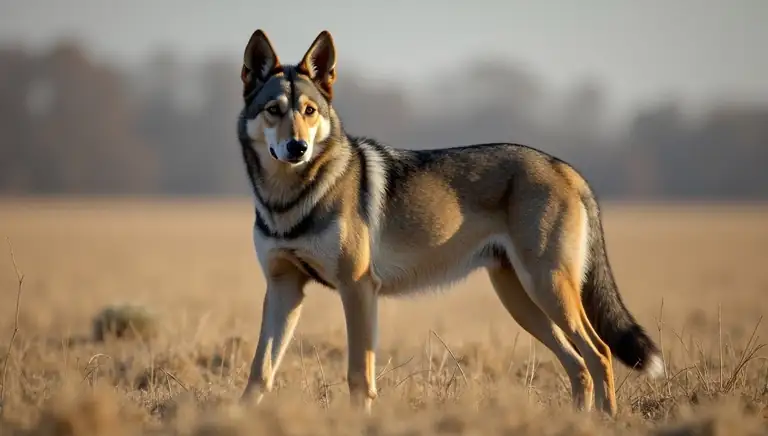
Wolf
волк
living beings wild animals noun
Learn Wolf with free cards in 30 seconds.
10 minutes a day can add up to 3,000 words a year. Spaced flashcards bring each word back when it is time to remember it.
Dieses Wort lohnt sich frueh.


How many words can you learn in a year?
If you learn 8-10 new words a day and review them regularly with flashcards, you can cover about 3,000 words in a year.
ZapomniEnglish brings words back at the right time: difficult words appear more often, familiar words less often.
Not sure what pace to start with? Check your vocabulary level and we will suggest words for your level.
We count words you add to learning and review regularly. Active use grows gradually and depends on practice.
| Pace | Per day | Per year | Best for |
|---|---|---|---|
| Easy | 3 words | ≈ 1,100 words | starting without pressure |
| Balanced | 5 words | ≈ 1,800 words | steady growth |
| Recommended | 8 words | ≈ 2,900 words | around 3,000 words a year |
| Fast | 10 words | ≈ 3,650 words | visible vocabulary growth |
| Intensive | 15 words | ≈ 5,500 words | strong motivation |
Wolf with Russian translation
Wolf usage examples
Usage examples will appear here with translation and context.
Learn by topic
Wolf belongs to the topic "Wild Animals". Start with a short 7-word set so the word is easier to remember in context.
Wolf synonyms
Related words worth learning together
Означает вид волка (Canis lupus), подчёркивает серую окраску или биологическую классификацию; используется чаще в научном и официальном контексте, чем простое «волк».
Der Grauwolf ist in Teilen Europas wieder heimisch geworden.
Означает арктическую популяцию или подвид волка, живущую в полярных регионах; чаще встречается в зоологических и географических описаниях и реже в повседневной речи.
Der Polarwolf ist an das raue Klima der Arktis angepasst.
What’s the difference
How is Wolf different from related words?
Short comparisons help you choose the right word by meaning, context, and typical examples.

В чем разница в английском между carry, wear, tote и lug
Carry — нести или иметь при себе, wear — носить на теле, tote — таскать с собой, lug — тащить тяжёлое с усилием.

В чем разница в английском между whole, entire, complete и intact
Разница между whole, entire, complete и intact: целое, весь объем, завершенность и сохранность без повреждений.

В чем разница в английском между choose, pick, select и opt for
Разница между choose, pick, select и opt for: обычный выбор, разговорный выбор, выбор из списка и осознанное предпочтение.
Related words and lists for Wolf








Fragen zu diesem Wort
What does Wolf mean?
großes wildes Raubtier aus der Familie der Hunde, das oft im Rudel jagt
How do you pronounce Wolf?
Wolf is pronounced as [vɔlf]. Audio is available on this page when the word has a recording.
Is Wolf part of Wild Animals vocabulary?
Yes, Wolf (волк) can be learned in the Wild Animals topic. This semantic link helps build related word lists and topic-based practice.
Is Wolf part of Living Beings vocabulary?
Yes, Wolf (волк) can be learned in the Living Beings topic. This semantic link helps build related word lists and topic-based practice.
Learn Wolf in your vocabulary
Add this word to practice, repeat it with audio, examples and your own word lists.