Blog
Russian Learning Blog
A selection of practical articles, ideas, and research that helps you learn russian faster and more consistently.
- Articles
- 36
- Practice
- 3
New articles
What to read now
Fresh articles and guides you can turn into vocabulary practice right away.
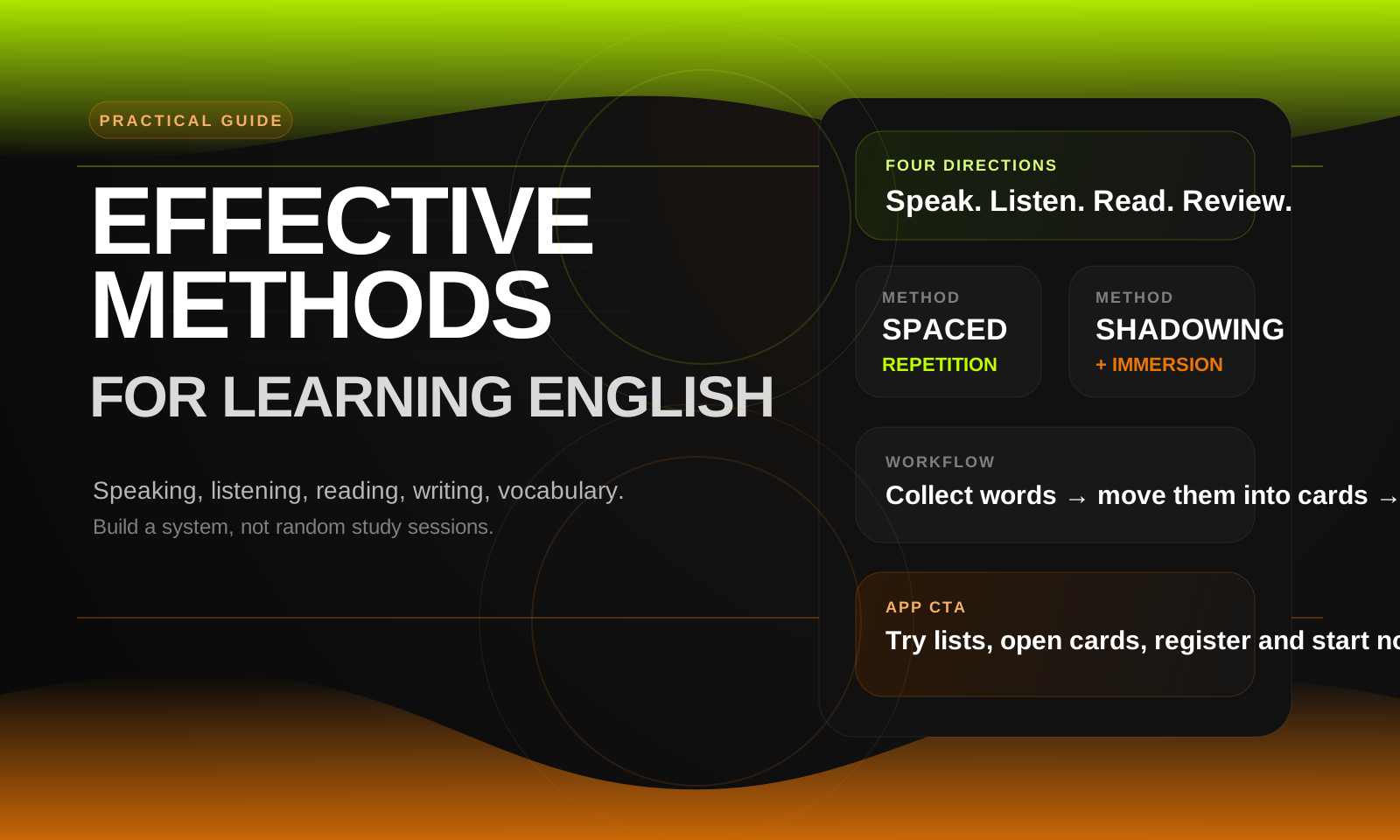
Effective Methods for Learning English
A practical guide to speaking, listening, reading, and vocabulary, with direct links to our app so you can start immediately.
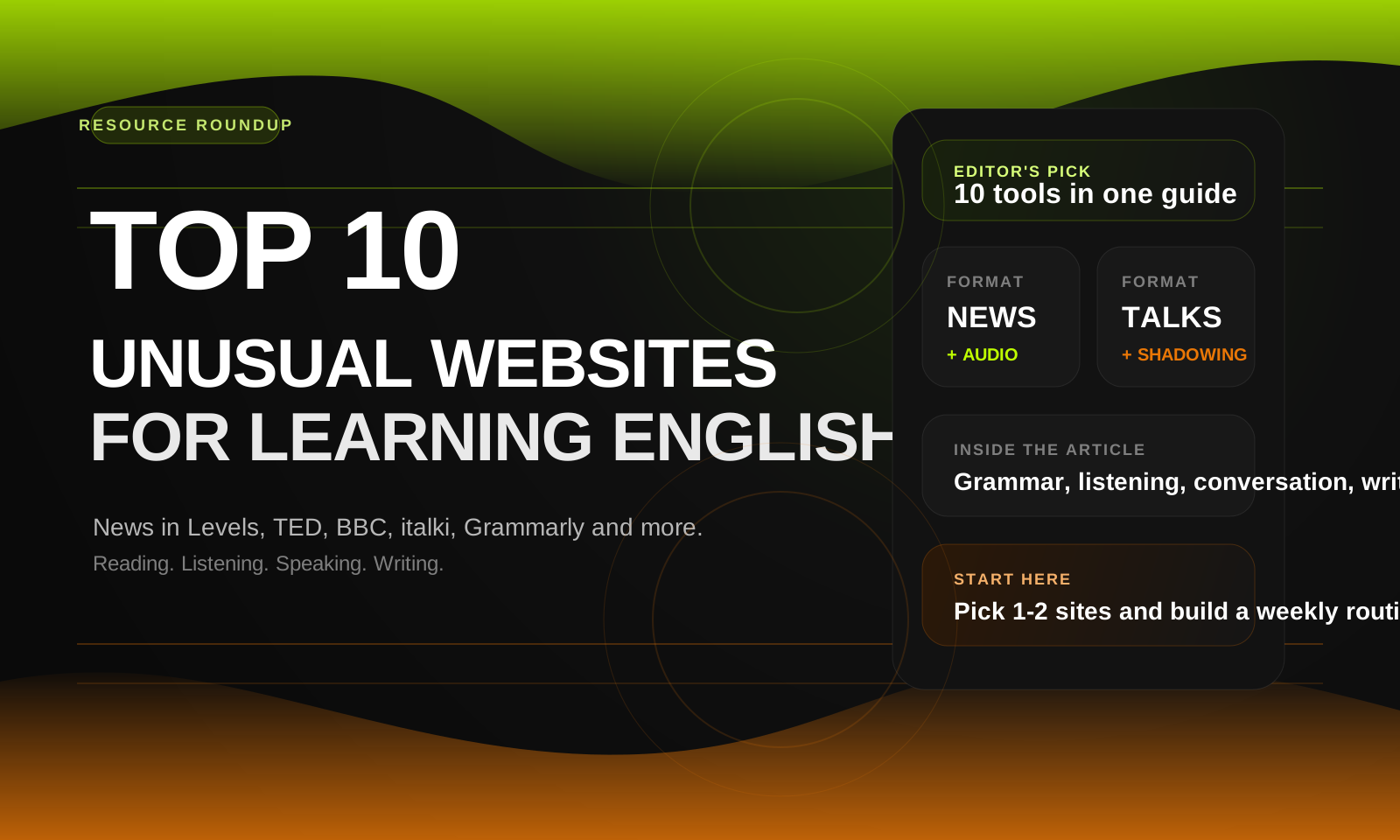
Top 10 Unusual Websites for Learning English
10 useful websites for English practice: level-based news, TED, chatbots, grammar tools, language exchange, and adapted books.
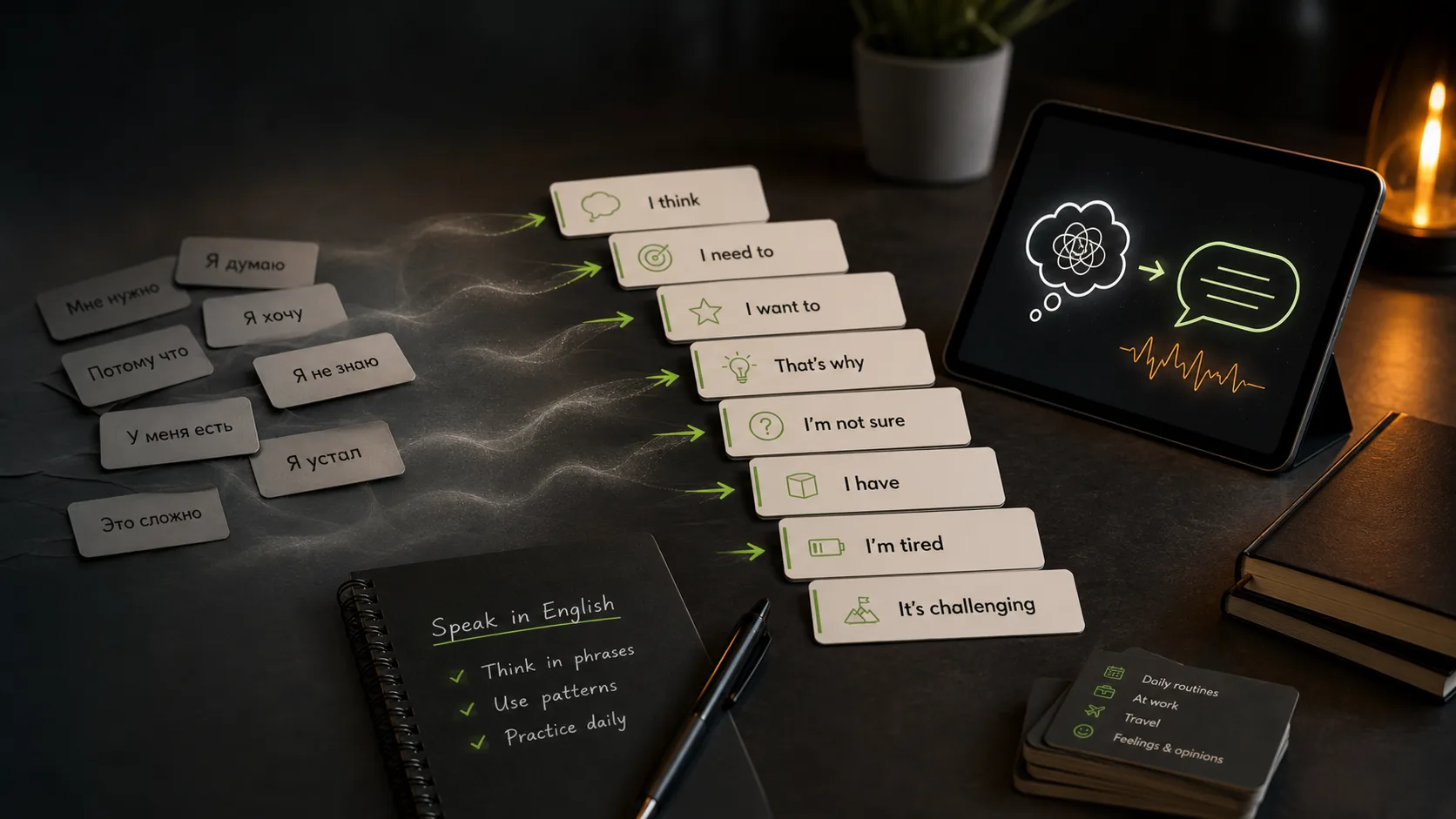
How to Stop Translating in Your Head and Start Thinking in English Phrases
Many learners know vocabulary, but during a conversation they first build a sentence in Russian, then translate it into English, and only then speak. As a result, speech becomes s…

English Food Vocabulary: What to Learn First
Food is needed by almost everyone: when traveling, in cafés, in shops, in messages, and in everyday conversations. But it’s better to learn it not as a long list of a hundred item…

How to Expand Your English Vocabulary: A One-Month System
Expanding your vocabulary does not mean adding as many new words as possible every day. If words are not reviewed and used, they disappear quickly. You need a system: a small numb…

How to Learn English from TV Series Without Quitting After the First Episode
TV series seem like a pleasant way to learn English, but they often turn into frustration. The characters speak fast, the jokes are unclear, and the subtitles are too slow to read…
All articles
Full article list
All localized articles in one compact list.
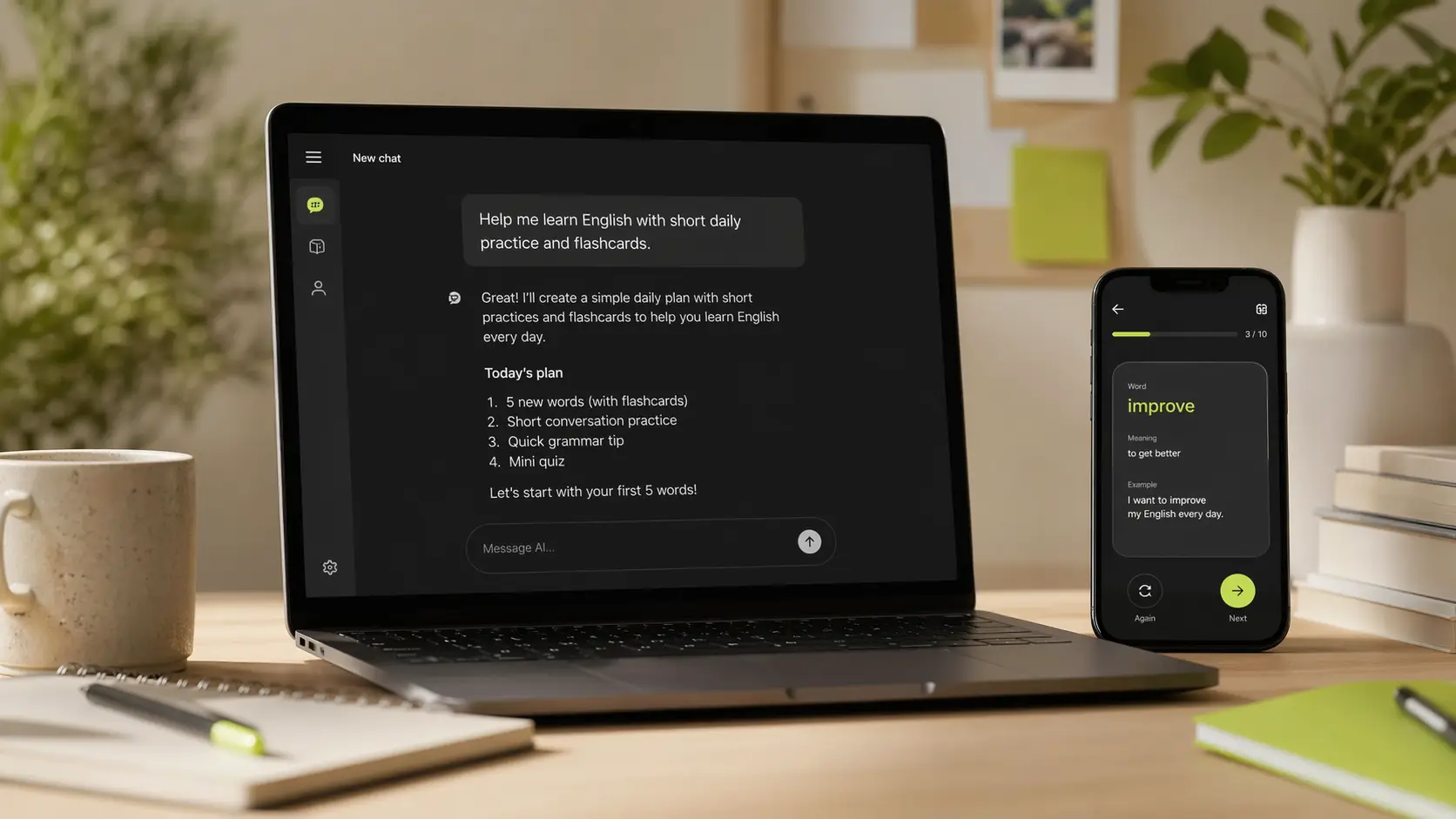
How to Learn English with ChatGPT and Flashcards Without Overload
A practical system for turning ChatGPT outputs into useful vocabulary, dialogues, mini exercises, and flashcards for daily review.
April 22, 2026
Читать статью →Effective Methods for Learning English
A practical guide to speaking, listening, reading, and vocabulary, with direct links to our app so you can start immediately.
March 17, 2026
Читать статью →Top 10 Unusual Websites for Learning English
10 useful websites for English practice: level-based news, TED, chatbots, grammar tools, language exchange, and adapted books.
March 17, 2026
Читать статью →How to Stop Translating in Your Head and Start Thinking in English Phrases
Many learners know vocabulary, but during a conversation they first build a sentence in Russian, then translate it into English, and only then speak. As a result, speech becomes s…
May 01, 2026
Читать статью →English Food Vocabulary: What to Learn First
Food is needed by almost everyone: when traveling, in cafés, in shops, in messages, and in everyday conversations. But it’s better to learn it not as a long list of a hundred item…
May 01, 2026
Читать статью →How to Expand Your English Vocabulary: A One-Month System
Expanding your vocabulary does not mean adding as many new words as possible every day. If words are not reviewed and used, they disappear quickly. You need a system: a small numb…
May 01, 2026
Читать статью →How to Learn English from TV Series Without Quitting After the First Episode
TV series seem like a pleasant way to learn English, but they often turn into frustration. The characters speak fast, the jokes are unclear, and the subtitles are too slow to read…
May 01, 2026
Читать статью →
English Phrases for Messaging: 50 Useful Phrases for Email and Chats
English messaging becomes much easier when you have a set of ready-made phrases. You do not need to write every message from scratch. It is enough to learn common patterns: how to…
May 01, 2026
Читать статью →
Word Order in English Sentences: A Beginner’s Guide
In English, word order matters more than in Russian. In Russian, you can say “Я сегодня читаю книгу” and “Сегодня книгу читаю я” — the meaning changes a little, but the sentence i…
May 01, 2026
Читать статью →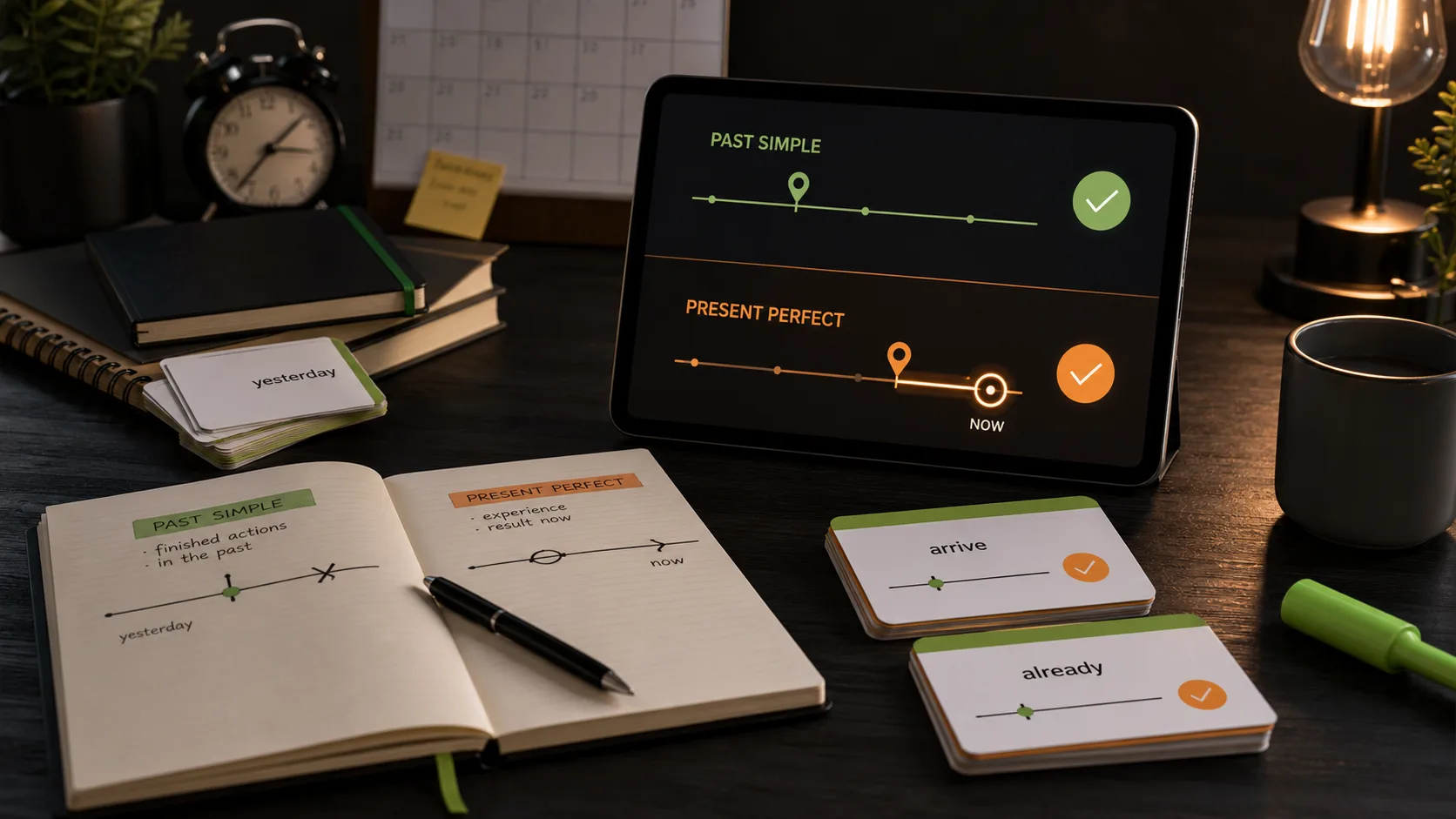
Past Simple and Present Perfect: When to Use Each Tense
Past Simple and Present Perfect are among the topics that Russian-speaking learners often find confusing. In Russian, you can say «я сделал» and use one form in different situatio…
May 01, 2026
Читать статью →
Present Simple and Present Continuous: What’s the Difference in Simple Words
Present Simple and Present Continuous are often confused because both tenses talk about the present. The difference is not in the word “present,” but in how we look at the action:…
May 01, 2026
Читать статью →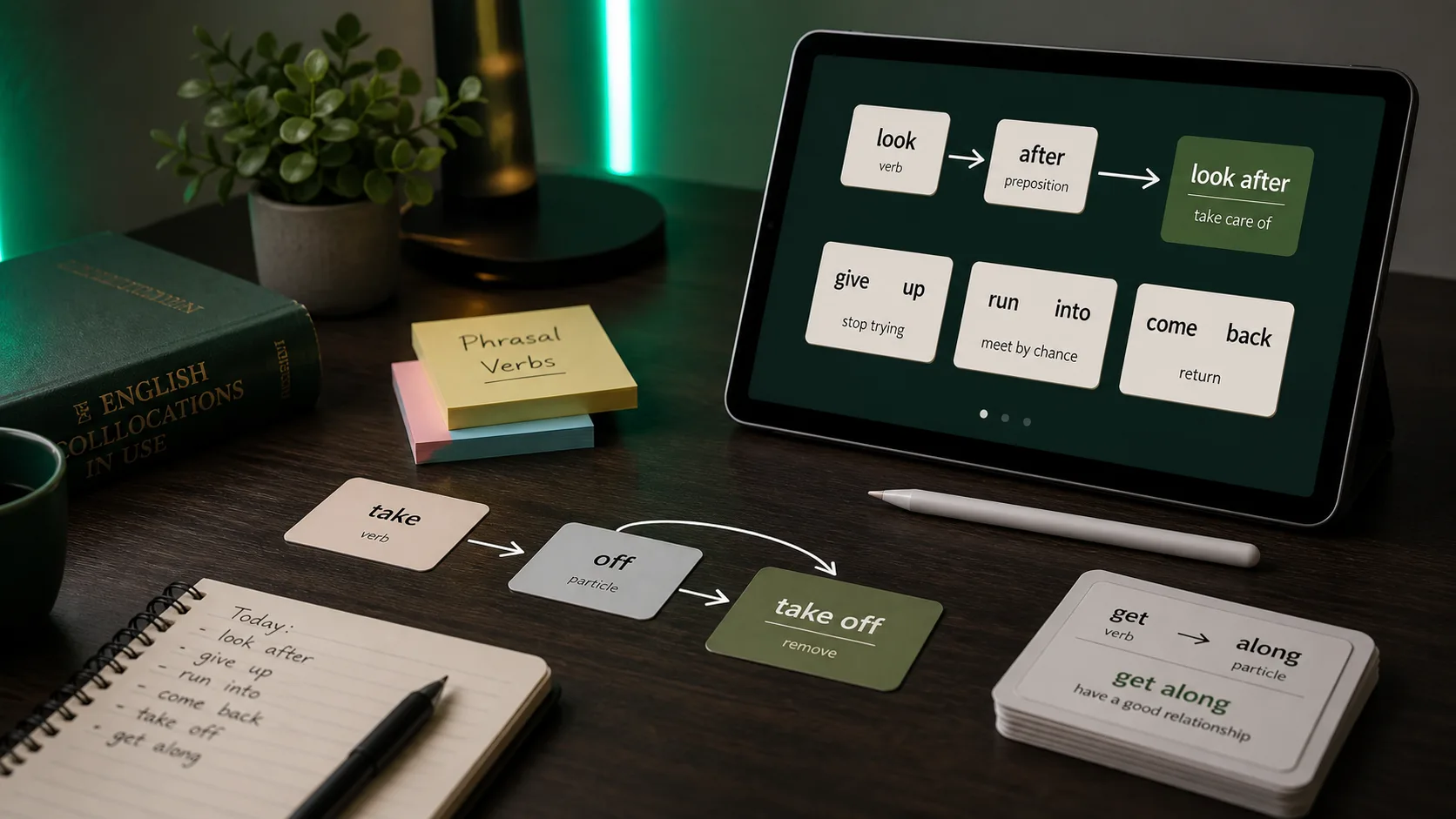
How to remember phrasal verbs and avoid mixing up their meanings
Phrasal verbs can seem chaotic: look up, look after, look for, look into. One and the same verb changes its meaning because of the small word after it. But you can learn them calm…
May 01, 2026
Читать статью →
Prepositions in, on, at: a simple explanation with examples
Prepositions **in**, **on**, and **at** are one of the most common sources of mistakes for English learners. In Russian, we often say “в”, “на”, and “у”, but in English the choice…
May 01, 2026
Читать статью →
English Irregular Verbs: How to Learn Them Without a Table
Irregular verbs can feel intimidating because they are usually presented in a big table: go-went-gone, see-saw-seen, take-took-taken. A table is useful as a reference, but it does…
May 01, 2026
Читать статью →
100 Most Useful English Words for Beginners: How to Learn Them Without Chaos
Beginners often feel they need to memorize thousands of words right away. In practice, it’s better to start with a small core: words you hear and use every day, and that quickly t…
May 01, 2026
Читать статью →Mini Quiz on English Words: Check 20 Common Expressions
Small quizzes help you quickly see which words and expressions already feel familiar and which ones are still stored only in passive memory. Below are 20 tasks on common English c…
April 30, 2026
Читать статью →How to Improve Your Pronunciation of English Words Without a Teacher
Pronunciation can feel difficult because English words are often not spelled the way they sound. But at the beginning, you do not need a perfect accent. What matters more is being…
April 30, 2026
Читать статью →How to Read in English Without Translating Every Word
Many people read English like this: they meet an unfamiliar word, stop, open a translator, go back to the text, stop again. Ten minutes later, they are more tired than helped. Rea…
April 30, 2026
Читать статью →How to Learn to Understand English by Ear: A Beginner’s Plan
Understanding spoken English is hard not because you have a bad ear. Most often, three things get in the way: words do not sound the way they are spelled, native speakers connect…
April 30, 2026
Читать статью →How to Learn English Grammar Without Memorizing Rules by Heart
Grammar is often presented as a set of tables, exceptions, and long rules. Because of that, many people put it off “for later” or try to learn all the tenses at once. The result i…
April 30, 2026
Читать статью →Why Flashcards Don’t Help You Learn English and How to Fix It
Flashcards stop helping when you use them like an endless stream of translations. If you tap the answer too quickly, add too many new words, and ignore examples, flashcards turn i…
April 29, 2026
Читать статью →Do You Need to Learn the Transcription of English Words?
It is useful to understand transcription, but you do not need to study it as a separate subject from day one. For most learners, it is more important to listen to the word regular…
April 29, 2026
Читать статью →What’s Better to Learn: Individual Words or Ready-Made Phrases
It’s best to learn both words and phrases, but for different purposes. Individual words help you expand your vocabulary. Ready-made phrases help you speak and write faster without…
April 29, 2026
Читать статью →Why I Understand English but Can’t Speak It
If you understand texts and videos but can’t speak quickly, that’s completely normal. Understanding and speaking are different skills. For comprehension, it’s enough to recognize…
April 29, 2026
Читать статью →How Many English Words Should You Learn a Day So You Don’t Quit After a Week
Short answer: for most people, it’s better to start with 10–15 new words a day. If you’re short on time, 5–7 is enough. What matters more than the number of new words is how many…
April 29, 2026
Читать статью →10 Common Mistakes in English Words That Make You Sound Less Natural
Sometimes an English mistake happens not because of grammar, but because of the wrong word choice. The translation may look similar, the meaning is clear, but the phrase still sou…
April 29, 2026
Читать статью →English for Travel: Phrases That Will Really Come in Handy on Your Trip
For a trip, you do not need to know all of English. What matters much more is being able to use short phrases confidently in typical situations: the airport, the hotel, a café, tr…
April 29, 2026
Читать статью →Business English: 40 Phrases for Emails, Meetings, and Tasks
Work English does not start with complex negotiations or perfect business style. Most of the time, it starts with simple tasks: writing an email, clarifying a deadline, asking for…
April 29, 2026
Читать статью →How to Start Speaking English When You Know Many Words but Can’t Form Sentences
It can happen like this: you seem to know a lot of vocabulary, you do well on tests, and you can read texts, but when you need to say a simple sentence out loud, everything falls…
April 29, 2026
Читать статью →How to Learn English Phrases, Not Isolated Words
Many people learn English through isolated words: table — table, important — important, decide — decide. That is useful, but not enough. In real speech, we rarely pull out words o…
April 29, 2026
Читать статью →Say, tell, speak, talk: how to stop confusing English speaking words
In Russian we often use one word, «говорить», but in English you have to choose: say, tell, speak, or talk. Because of that, even simple phrases can slow you down: how do you say…
April 29, 2026
Читать статью →How to fit English into your daily routine without overload
Many people start learning English with a big burst of energy: they buy a course, download apps, save videos, and promise themselves they’ll study every day for an hour. Two weeks…
April 29, 2026
Читать статью →Why English words get forgotten and how to review them properly
You learned a word in the evening, still remembered it in the morning, and a week later it was gone. Sounds familiar? It may feel like your memory is weak or that English is just…
April 29, 2026
Читать статью →Where to Start Learning English Words: a 7-Day Plan
If you open an app, a textbook, or a word list and don’t know where to begin, that’s completely normal. The problem is often not laziness, but too many choices: travel words, phra…
April 29, 2026
Читать статью →
Speaking English: 6 Different Words
In Russian, we often just say «говорить» or «сказать». In English, there are several words for this: say, tell, speak, talk, ask, answer. They do not replace each other one-to-one…
April 27, 2026
Читать статью →
How to say “лить” in English: 6 different words
In English, you can’t always translate «лить» with just one word. First, picture what’s happening: is the liquid flowing in a stream, dripping from above, accidentally spilling, o…
April 27, 2026
Читать статью →